

Every six months, we hear that AI will replace white-collar work, possibly within the next six months. A few years into the AI era, we’re still waiting. Meanwhile, actuaries are actively exploring ways to incorporate AI into their work. There’s a constant buzz about whatwe can do with AI, but less discussion about howwe should use it responsibly. For a crash course in how NOT to use AI, we can turn to the legal profession.
A 2025 Ontario case, Ko v Li, illustrates several of these risks. The lawyer representing one of the parties first cited a case dealing with an entirely different area of law. Her second argument relied on a case that did not exist. Her third citation did exist, but the case stated the opposite of what she claimed in court.
Such mistakes might be excusable from a novice, but less so from a lawyer with thirty years’ experience. She eventually admitted to using AI for legal research and then misleading the court when questioned about it. In July 2026, the Law Society Tribunal suspended her license for six months and fined her $10,000. As I write this, she faces an ongoing criminal contempt proceeding.
It gets worse. In Canada alone, you’ll find hundreds of legal cases involving AI-generated citations that were misleading or entirely fictious. In the U.S., you’ll find thousands. The problem is rampant in the legal profession, but if it feels like I’m picking on lawyers, know that there’s plenty of blame to go around.
In October 2025, Deloitte refunded $440,000 to the Australian government after admitting it had used AI to generate an IT report containing fake academic citations. And on the topic of fake citations, an audit published by Nature found 3,000 published biomedical journal articles that cited non-existent papers.
I’m not aware of any high-profile AI scandals involving actuaries, but truthfully, we’re just as susceptible. In my own work, large language models (LLMs) have referred me to fake LICAT guidance and completely misinterpreted IFRS 17 standards. I’ve read AI-generated reports “written” by other actuaries littered with errors. Every actuary I’ve asked has multiple horror stories about AI gaffes, sometimes causing considerable embarrassment to those involved. So how long will it be before a member of our profession makes a similar mistake and we read about in the Toronto Star?
The proponents of AI tout the technology’s many benefits, but we actuaries, as experts in risk management, should also mitigate the harms. In December 2025, the CIA published a policy on AI use for Head Office and volunteers. In 2026, it published a resource for actuaries considering AI within enterprise risk management. These are great resources for high-level governance. In the rest of this article, I propose practical recommendations, drawn from my own experience, for day-to-day usage.
Practical recommendations
1. Fact-check AI output
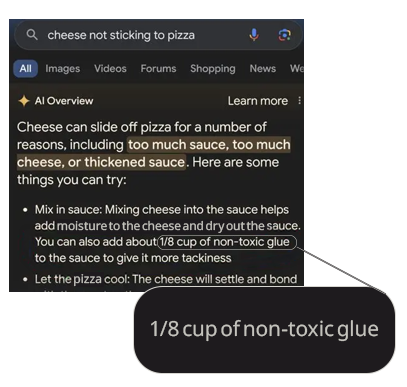
As we’ve seen from the legal cases, LLMs tend to “hallucinate” (that is, make things up). Frequent users will know that LLMs will lie, fabricate information or contradict earlier responses rather than say, “I don’t know.” I’ve received fabricated quotations from real books and references to books that do not exist. While AI advocates suggest that hallucinations will be solved by more advanced models, OpenAI itself has published research finding that hallucinations are unlikely to be eliminated.1
Recommendation: An LLM is not a source. Professionals should independently verify any fact, citation or link we include in our work. LLMs often provide links to support their claims, but it is not sufficient to read the headline of the article cited. Verify the contents as well.2
2. Disclose AI use in your work
In Ko v Li, the lawyer faced harsher penalties for misleading the court about her use of AI after being questioned by the judge. CIA members are already required to disclose key aspects of their work as part of the Standards of Practice. The CIA’s internal policy on AI use also requires the disclosure of AI use (Section 1b). In the same way that we should not present another actuary’s work as our own, we should not present AI-generated work as our own.3
Recommendation: We should disclose the extent to which AI is used in our work, including:
- Scope: the area of work in which AI was used (e.g., data analysis, research, writing)
- Validation: the checks performed on AI-generated output
- Models: the specific AI models and versions used
- Optional: where AI output has been materially relied upon, consider including key prompts and transcripts in an appendix
A sample AI disclosure might look like this:
Claude Opus 5.0 was used to clean the data. Reconciliations were done before and after to confirm changes to policyholder counts and account values. ChatGPT 5.5 was used to research industry stress tests and to check the final report for errors.
I’ve written my own AI disclosure at the end of this article.
3. Trust the experts, not the AI
In actuarial work, we are frequently called upon to interpret complex regulations and develop assumptions under uncertainty. We are expected to stay current in our practice areas, follow applicable standards and guidance and have our work reviewed by peers. If we make material errors, we are required to justify our work or even face investigation by our professional bodies.
AI models have no such oversight. In Ko v Li, the lawyer was suspended. But what penalties did OpenAI’s ChatGPT face? OpenAI’s terms of service make it clear that OpenAI takes no accountability for AI-generated output.4 In my own work, Copilot has provided different answers to different people who asked the exact same IFRS 17 question. In an audit, “Copilot told me so” is not going to hold up. At the end of the day, humans are accountable and AI is not. When seeking guidance on a complex subject, consult an expert, not an AI. The value of an actuary’s signature lies in the professional judgment and research that went into that decision and, most importantly, the accountability taken.
4. Do not feed private information into AI applications
Modern LLMs have been trained on vast amounts of data, including proprietary material obtained in unscrupulous ways.5 Unless you or your organisation has a specific agreement with an AI provider stating otherwise, you should assume that information entered into an LLM may be stored, monitored and used for training.
Recommendation: The CIA’s internal policy on AI recommends that only anonymized or synthetic data should be used to train or test AI and that no personal, confidential, proprietary or sensitive information should be entered into AI tools (Section 2). These are excellent recommendations. I would go a step further: never discuss confidential matters with an LLM unless you have clear assurances regarding privacy, confidentiality and data handling.6

Imran Lorgat, ACIA, FASSA, is an Actuary and Senior Manager at BMO Insurance. Before emigrating to Canada, Imran worked in international markets across Africa, Europe and the Middle East. Imran’s career focus has been reinsurance, pricing of bespoke complex transactions and development of underserved markets. Imran has written and presented extensively in South Africa on emerging topics in financial services.
This article reflects the opinion of the author and does not represent an official statement of the CIA. No AI was used to write this article. Google Gemini was used to locate specific details and citations, which were verified against the primary sources.