

Financial literacy is not a single lesson. Actuary and financial educator Deborah McMillan explains how practical, age-appropriate experiences can help children build money habits that last.
When Deborah McMillan’s daughter was four or five years old, Deborah overheard her reveal how mysterious money can seem to a young child: “Money grows in my mommy’s purse.”
It was a funny comment, but it also revealed how little her daughter understood about where money came from. Deborah began looking for an after-school program that could introduce financial concepts in a way a young child could understand. She could not find one.
At the same time, she was watching her retired father struggle financially after reaching retirement without savings. Seeing one family member at the beginning of her financial life and another facing the consequences of decisions made over many years convinced Deborah that financial education needed to start earlier.
Her response was to found Knowledge Makes Cents, which teaches personal finance to children from junior kindergarten through grade 12, along with resources for parents. Thirteen years after founding it, her approach continues to draw on nearly 25 years of experience as a pension and retirement consulting actuary.
That combination matters. Deborah understands the long-term effects of saving, inflation, interest rates and the time value of money. She also spent years explaining complex pension concepts to plan members in terms they could use. Her experience has shown her what financial decisions can look like decades later, and how difficult it can be to change established habits once the consequences become urgent.
For actuaries, parents and people involved in children’s education, her message is clear: financial literacy should begin early, but the lesson has to fit the child.
Start with where money comes from
It may be tempting to begin with saving, budgeting or even compound interest. For very young children, however, Deborah recommends starting with a more basic question: Where does money come from?
Children first need to understand that money is earned and limited. Parents can introduce the idea by talking about their work, describing how different people earn money and connecting those conversations to everyday family life.
Once that foundation is in place, children can begin learning what to do with the money they receive.
“The lesson has to be appropriate for the child in front of you. For a very young child, understanding how money is earned should come before learning how to save. As they grow, you can build on that foundation with saving, spending and longer-term goals.”
This progression is central to the programs Deborah developed. She began by considering what a financially capable adult should understand, then worked backward to determine how early each concept could be introduced. Some ideas can begin in kindergarten. Others become more meaningful when children have their own money or are beginning to think about education, careers and adult life.
Give children money they can manage
One of the most effective ways to teach financial literacy is also one of the simplest: give children an appropriate amount of money and let them make decisions with it.
Deborah recommends an allowance because it gives children a chance to save, spend, budget and reconsider their choices. The amount does not need to be large. In fact, having limited money requires a child to make more meaningful decisions. A child might spend everything immediately, regret a purchase or later realize that buying something used would have left money for another goal. Those experiences can be frustrating, but they are also instructive.
“Children need room to make their own financial decisions and their own mistakes. An allowance lets them do that while the consequences are still small. They can learn from a choice without putting their basic needs at risk.”
Adults may feel an understandable urge to prevent every poor choice. But a small mistake today can make budgeting feel real in a way that a lecture rarely will. The goal is not to let children fail without support. It is to give them a safe opportunity to make a decision, experience the result and talk about what they might do differently next time.
Give each dollar a job
To help children decide how to use their allowance, Deborah teaches a four-jar system:
- Save: Set money aside for the future or a larger goal
- Needs: Cover necessary expenses
- Wants: Spend on things that make life more enjoyable
- Share: Help other people or the community
The system makes an important distinction without suggesting that children should never spend money on something fun. Wants have a place. The lesson is that needs should be considered first and that not every dollar needs to be spent immediately.
The savings jar can also make a distant concept more relevant. A young child is unlikely to be motivated by retirement, but they may be excited to save for a toy, activity or other goal they care about. Reaching that goal gives them a direct experience of what saving can make possible.
Deborah describes this as learning to “pay my future self first.” Each time children receive money, they set aside a portion before deciding what to do with the rest. The phrase introduces a habit that can grow with them, even as the goals become larger and the time horizons become longer.
Keep the lessons relevant as children grow
There is no single money conversation that works for every child. The topics and activities should evolve as children gain experience and begin making more of their own financial decisions.
- Younger children: Explore where money comes from, how it is earned and the difference between needs and wants.
- Older children: Introduce saving goals, price comparisons and choices involving an allowance.
- Teenagers: Discuss postsecondary education, careers, income and the kind of life they hope to build.
A child’s interests also matter. Some children naturally want to save, while others are eager to spend. Some become curious about investing at an early age. Effective financial education responds to that starting point rather than following a rigid script.
This is equally important in schools and community programs. A technically accurate lesson will have limited value if it is disconnected from the decisions children are ready to make. Teaching elementary students about mortgages, for example, may be less useful than helping them understand how money is earned or how to save for something meaningful to them.
Financial education is strongest when it is practical, relevant and reinforced beyond a single lesson. Schools and community organizations can introduce important concepts, but conversations and experiences at home help turn that information into lasting habits.
Parents don’t need to know every answer
Some parents may avoid money conversations because they are not confident in their own financial knowledge. Deborah does not see that as a reason to wait.
Parents and children can learn together. They can ask questions, look up unfamiliar concepts and discuss why they make certain decisions. Being open about the learning process can show children that financial literacy is something people continue developing throughout their lives.
Actuaries can help make those conversations easier. Their work provides a clear view of how decisions made today can shape financial security many years from now. By translating that knowledge into accessible examples and sharing it with families, educators and communities, actuaries can help people understand not just what a sound financial habit is, but why it matters.
Financial Literacy Month offers a reason to begin. The real value, however, comes from continuing the conversation after November. Explore more practical tips from Canada’s actuaries to help build financial security at every stage of life.
Money is part of everyday life. Learning about it should be too. Share this article with a parent, educator or decision-maker in your network this Financial Literacy Month.
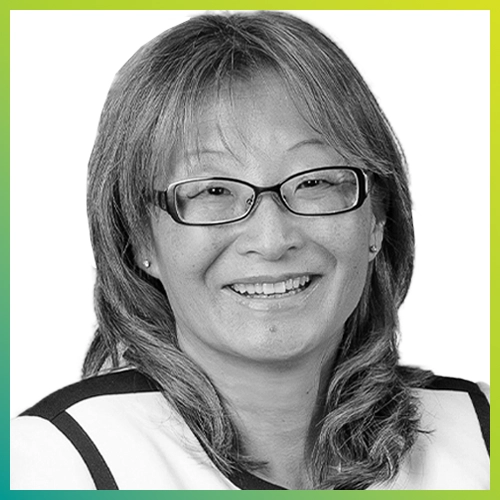
Deborah McMillan is an actuary and the founder of Knowledge Makes Cents, a financial education academy for children and parents. Before becoming a full-time entrepreneur, she spent nearly 25 years in pension and retirement consulting. She has also provided financial literacy programming for youth experiencing homelessness and volunteers with several boards and finance and pension committees.